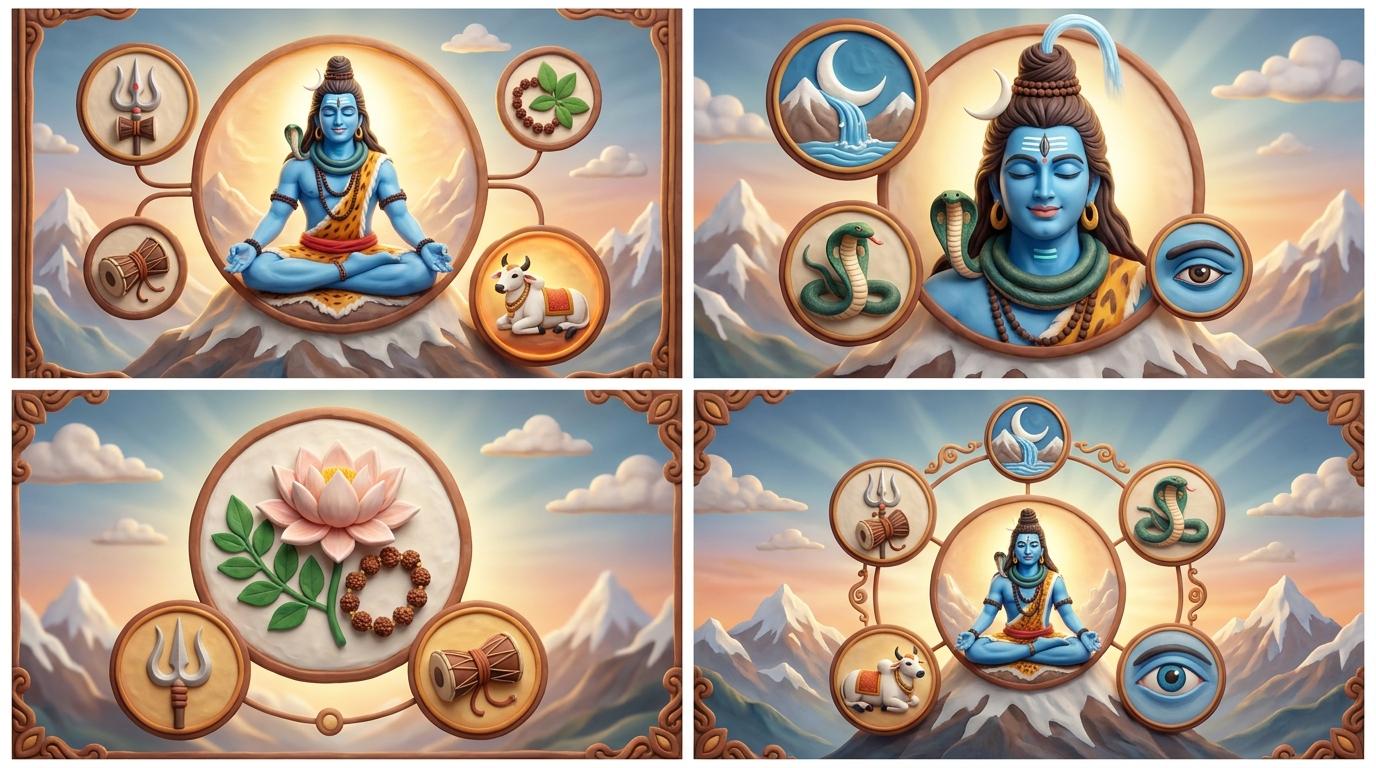
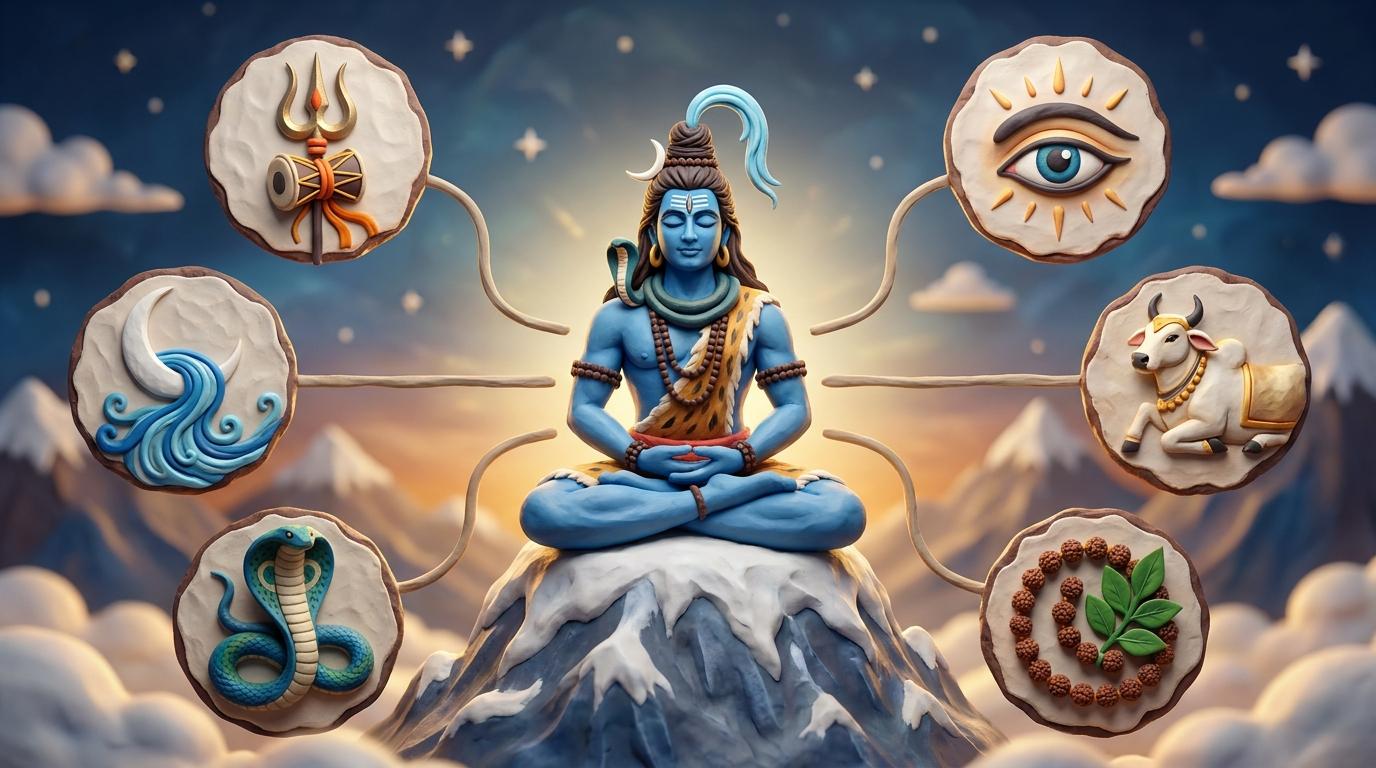
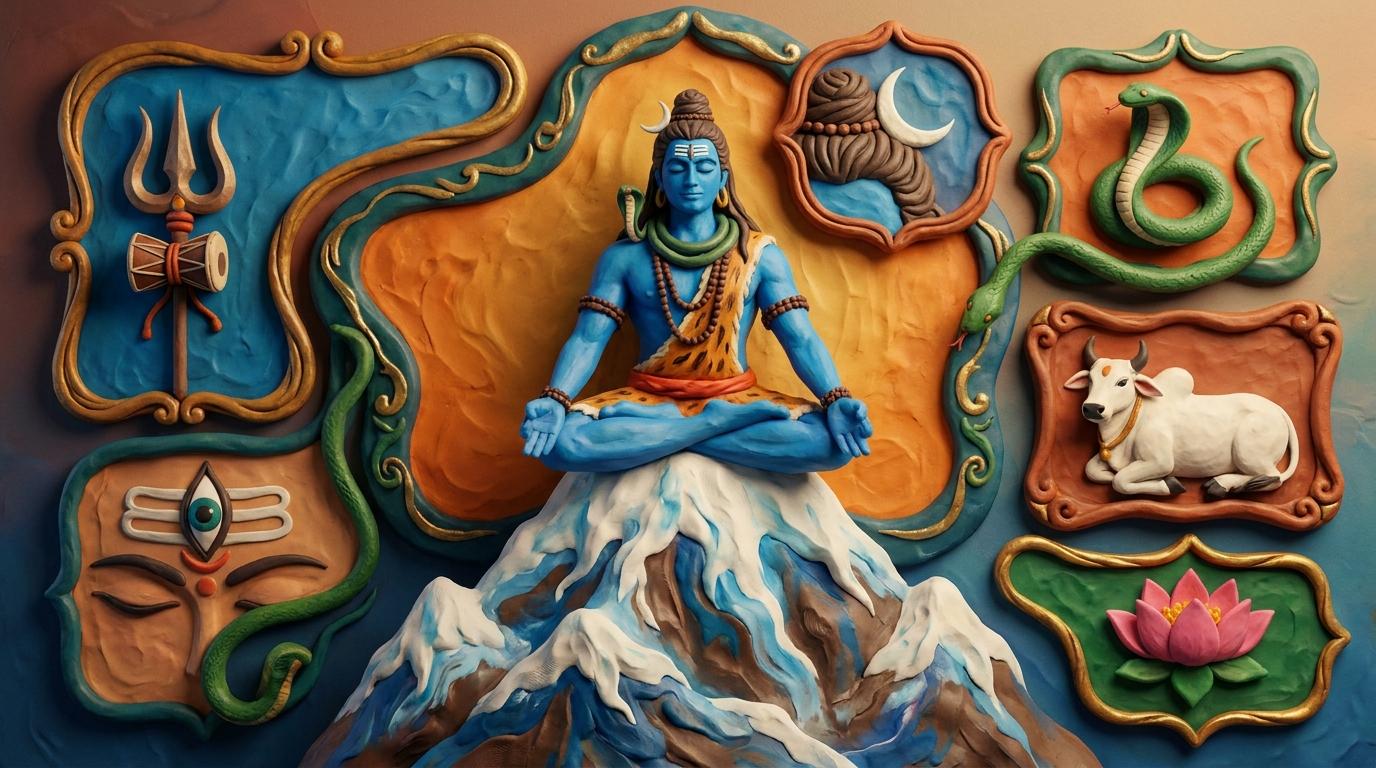
🔱
Trishul
त्रिशूल
The sacred trident representing the three fundamental aspects of existence —
Srishti (creation), Sthiti (preservation), and Samhara (dissolution).
It also symbolises the three qualities: Tamas, Rajas, and Sattva.
With a single sweep, Mahadev balances the entire cosmos.
🪘
Damru
डमरू
The hourglass-shaped drum from which the primordial sound Nada Brahma — the sacred syllable OM — emerges.
Its rhythm marks the heartbeat of the universe, the cadence of time itself.
In Nataraja's dance, the Damru calls creation into being.
🌙
Crescent Moon
चंद्रमा
The Crescent Moon (Chandra) resting on Shiva's matted locks reflects
mastery over time and the cycles of the mind. He wears the waxing and waning moon
as an ornament, reminding us that all phases of life are equally divine.
🌊
Ganga
गंगा
The river Ganga flowing from Shiva's matted hair symbolises the purification of consciousness
and the flow of divine wisdom. Mahadev accepted Ganga's descent to earth,
catching her in his locks to prevent the earth from being shattered by her force.
👁️
Third Eye
तृतीय नेत्र
The Third Eye (Trinetra) — the eye of Jnana (inner knowledge) —
pierces through the veil of Maya and perceives ultimate reality.
When opened in cosmic wrath, it unleashes Agni — the fire of destruction
that dissolves ignorance and illusion.
🐍
Vasuki — The Serpent
वासुकि
The serpent Vasuki coiled around Shiva's neck signifies the conquest of ego
and the transformation of poison (Halahala) into nectar. It also represents
Kundalini Shakti — the dormant cosmic energy lying coiled within all beings.
💨
Vibhuti
विभूति / भस्म
The sacred ash (Bhasma) smeared on Shiva's body is a constant reminder
of the impermanence of the physical form. Everything returns to ash —
only the eternal Atman endures. It is both a symbol of renunciation
and of Shiva's grace.
📿
Rudraksha
रुद्राक्ष
Meaning "eyes of Rudra", the Rudraksha beads are said to have sprung from Shiva's tears
of compassion shed upon witnessing the suffering of all beings.
These sacred seeds carry divine vibration and are worn for spiritual protection and clarity.
🐯
Tiger Skin
व्याघ्रचर्म
Shiva sits upon and wears the tiger skin (Vyaghracharmba), representing
the conquest of lust, desire, and wild instincts. The tiger is the vehicle of
Shakti — by wearing its skin, Shiva demonstrates mastery over all primal forces.
🐂
Nandi
नंदी
Nandi, the sacred bull and Shiva's vahana (vehicle), embodies
unwavering devotion, strength, and steadfast adherence to Dharma.
As the gatekeeper of Kailash, Nandi represents the ideal devotee —
pure, faithful, and ever-present.
🏔️
Mount Kailash
कैलाश पर्वत
Kailash — the abode of Mahadev — represents the absolute stillness of the Self.
Unclimbed and unconquered, it stands as the axis of the universe (Meru),
the point where heaven and earth meet, and where all creation radiates outward in silence.